
Post-Operative Recovery After Cosmetic Surgery

Post-operative recovery care supporting patients through the healing phase following cosmetic surgery, delivered with clinical awareness of body response and recovery stages.

Expert Post-Surgery Recovery Support from The Angels Touch is available in North and Central London (Marylebone).
What Post-Operative Recovery Is (and Is Not)
Post-operative recovery is a distinct phase of the surgical process, separate from the procedure itself and separate from medical follow-up.
Following cosmetic surgery, the body enters a period of physiological adjustment in which healing responses develop over time. This phase directly influences how surgical results stabilise and present in the weeks and months that follow.
Post-operative recovery care is not cosmetic massage or relaxation therapy, and it is not a generic protocol applied uniformly to all patients. It does not replace medical care, surgical assessment, or clinical decision-making.
Post-operative recovery care focuses on supporting the body’s response to surgery, monitoring healing patterns, and applying hands-on support only when timing and presentation allow. The aim is to support recovery conditions without disrupting surgical outcomes or the natural healing process.
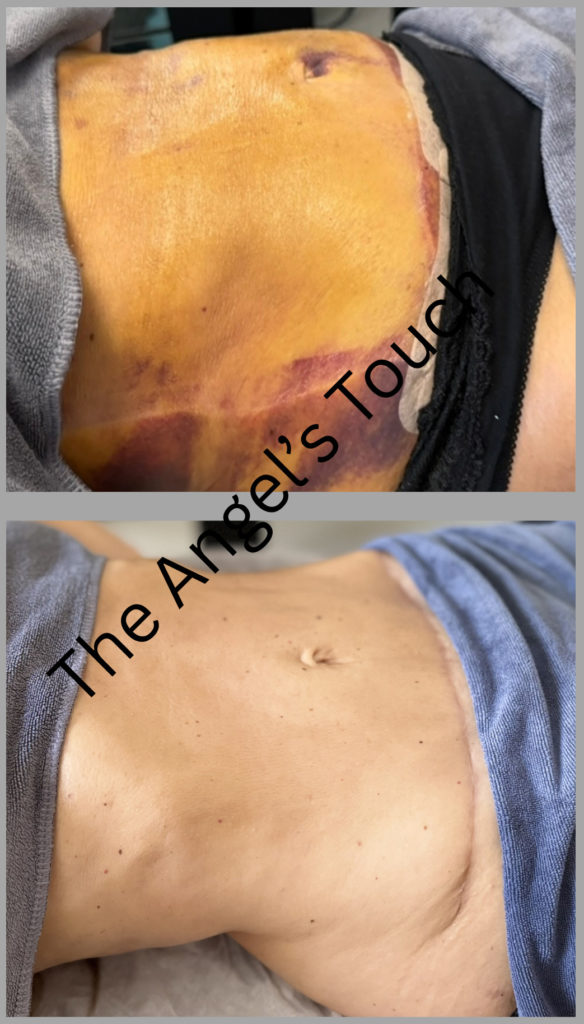

The Healing Phase After Cosmetic Surgery
The post-operative healing phase is dynamic and variable, even when surgery is technically successful. Recovery does not progress in a straight line and may fluctuate throughout the early and mid-healing stages.
During this period, patients may experience shifting swelling patterns, changes in tissue firmness, evolving contour irregularities, temporary movement restriction, or variations in compression tolerance.
Healing outcomes are influenced by the surgical procedure, individual body response, compression use, movement patterns, posture, and overall recovery conditions. External input during recovery, including hands-on intervention, can influence how these changes settle.
Poorly timed or overly forceful intervention may interfere with normal recovery progression, contributing to prolonged swelling, irregular contour development, increased discomfort, or delayed adaptation.
Why Technique, Timing, and Pressure Matter
In post-operative recovery, how and when hands-on support is applied is often more important than the specific technique used.
Healing tissues are vulnerable to excessive pressure, friction, and poorly timed manipulation. Even well-intended intervention applied too early or too aggressively may disrupt normal healing responses.
Effective recovery support requires an understanding of surgical timelines, body response at different stages, and the difference between hands-on support that assists healing and pressure that places unnecessary stress on recovering tissues.
Components of Post-Operative Recovery (Within Scope)
Post-operative recovery is multi-factorial and cannot be addressed through a single approach. It considers the interaction between fluid dynamics, tissue adaptation, compression, and movement.
Manual Lymphatic Drainage supports fluid movement during early recovery when appropriate.
Fibrosis management addresses tissue firmness caused by inflammation and fluid stasis, with early intervention helping reduce severity when timed correctly.
Scar tissue management involves manual manipulation and soft tissue release, introduced only once healing allows, and supports tissue mobility and comfort.
Compression management involves ongoing assessment and adjustment. Poor compression may contribute to irregularities, discomfort, or delayed adaptation.
Musculoskeletal support addresses compensatory movement and postural strain.
Seromas are not manually drained and are referred back to the surgical team when intervention is required.


The Patient’s Role in the Recovery Process
Post-operative recovery is not a passive process. While appropriate recovery support can assist healing, patient cooperation plays a significant role in how recovery progresses.
Adherence to post-operative guidance, appropriate use of compression, activity modification, and attendance consistency all influence the body’s response during healing.
Behaviours such as excessive activity, inconsistent compression use, or unsupervised self-treatment may place additional strain on recovering tissues and affect recovery progression.
Effective post-operative recovery relies on collaboration between the patient, recovery practitioner, and surgical team, with each contributing to the overall outcome.
What Can Go Wrong Without Appropriate Recovery Oversight
Without appropriate recovery oversight, patients may experience prolonged swelling, fibrosis progression, surface irregularities, compression-related contour issues, or movement restriction.
These issues are often related to recovery management rather than surgical error. Early observation and adjustment can influence how recovery progresses and how results settle.
Expert Post-Surgery Recovery Support from The Angels Touch is available in North and Central London (Marylebone).